





How to Label Your Gym Equipment Before a Move (And Why It Actually Matters)
Posted by Ardent Fitness on May 5th 2026
Here's something we've learned after helping dozens of fitness facilities relocate: the difference between a smooth move and a chaotic one often comes down to one thing — how well you labeled your equipment before the moving trucks showed up.
We've seen it go both ways. The gyms that take inventory labeling seriously? They're usually back up and running within days. The ones that don't? Well, they spend weeks sorting through mismatched consoles, missing hardware, and equipment that ends up in the wrong spots.
If you're planning a move, this is where you want to start. (And if you need the bigger picture on relocating your facility, we've got a full Gym Relocation Playbook that walks through the entire timeline.)
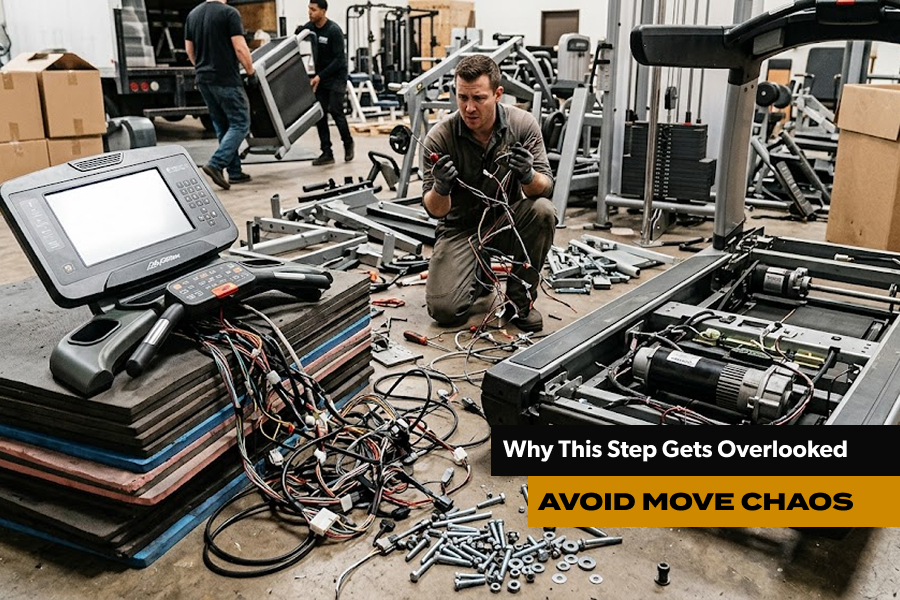
Why This Step Gets Overlooked (And Why You'll Regret Skipping It)
Moving gym equipment isn't like moving office furniture. You're dealing with machines that have integrated electronics, calibration systems, detachable parts, and wiring that all needs to be reconnected correctly on the other end.
When you break down a treadmill or a cable machine, you're creating dozens of loose pieces. Without a clear system to track them, your installation crew ends up playing detective — trying to figure out which console belongs to which machine, where each piece of hardware goes, and what the serial numbers are.
That guesswork adds hours to your installation time. Sometimes days. And it pushes back your reopening date, which means lost revenue.
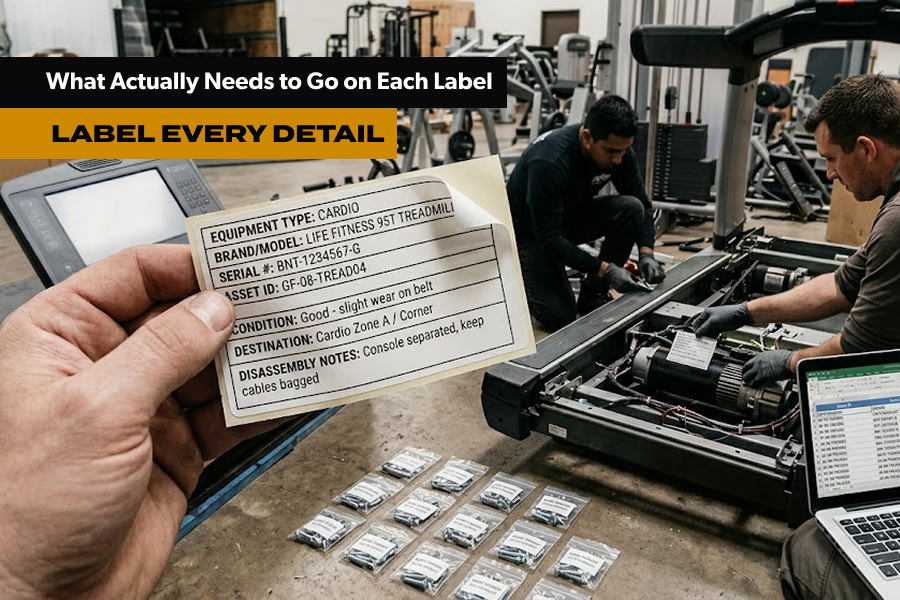
What Actually Needs to Go on Each Label
A good labeling system isn't complicated, but it does need to be thorough. Here's what we recommend including on every label:
- Equipment type (cardio, strength, accessory)
- Brand and exact model number
- Serial number
- Your internal asset ID (if you use one)
- Current condition notes
- Where it's going in the new space
- Any disassembly notes your team needs to know
All of this information should also live in a master inventory spreadsheet. The physical labels and the digital record need to match up perfectly. When they don't, you end up with confusion on move day.
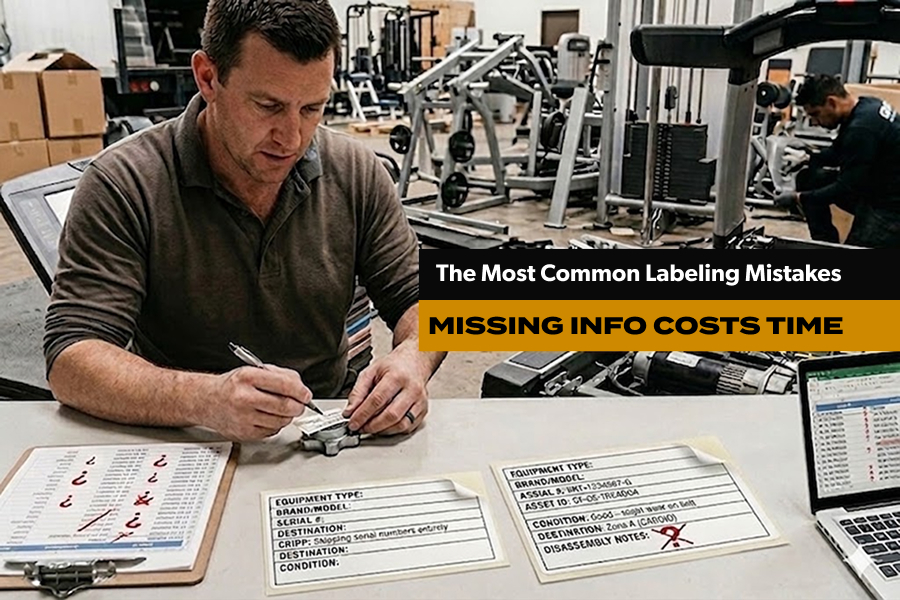
The Most Common Labeling Mistakes We See
Even gyms that mean well run into problems. Here are the mistakes that cause the most headaches:
- Writing down "Life Fitness" without the specific model. That doesn't help when you have six different Life Fitness machines and you're trying to match consoles back up.
- Skipping serial numbers entirely. This one comes back to bite you during warranty claims or when you're trying to verify what you actually moved.
- Labeling the frame but not the console. They get separated during the move, and suddenly you're matching parts by trial and error.
- Not noting where each piece goes in the new facility. Your movers shouldn't have to guess where the leg press belongs.
- Failing to cross-check labels against the master list before moving day. If there's a mismatch, you want to catch it while everything's still in one place.
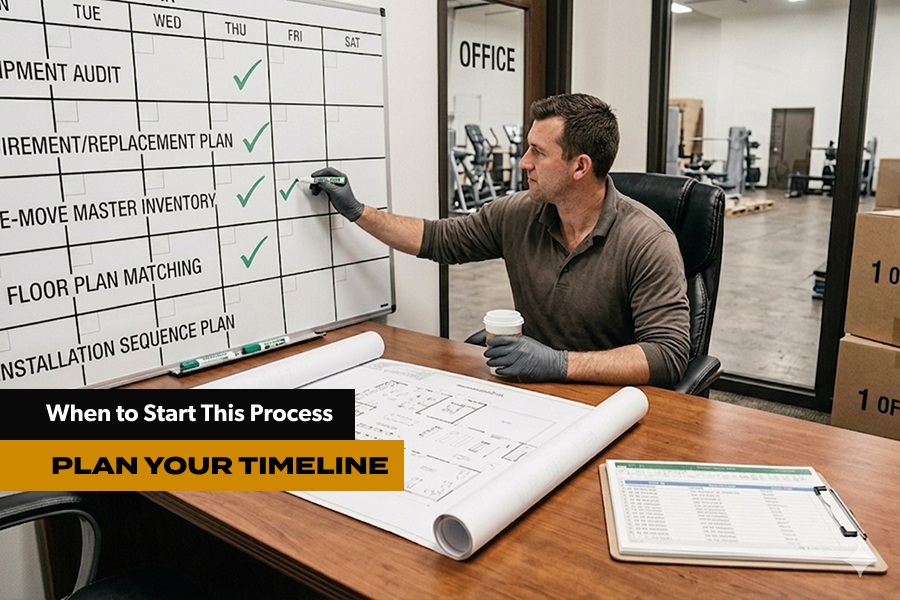
When to Start This Process
Give yourself 30 to 45 days before move day. Seriously.
That timeline gives you enough breathing room to:
- Figure out which equipment is actually making the move
- Identify what's being retired or replaced
- Complete your documentation without rushing
- Match everything up with your new floor plan
- Plan out the installation sequence
If you wait until disassembly day to start labeling, you're going to miss things. It's that simple.
How Labeling Protects Your Equipment
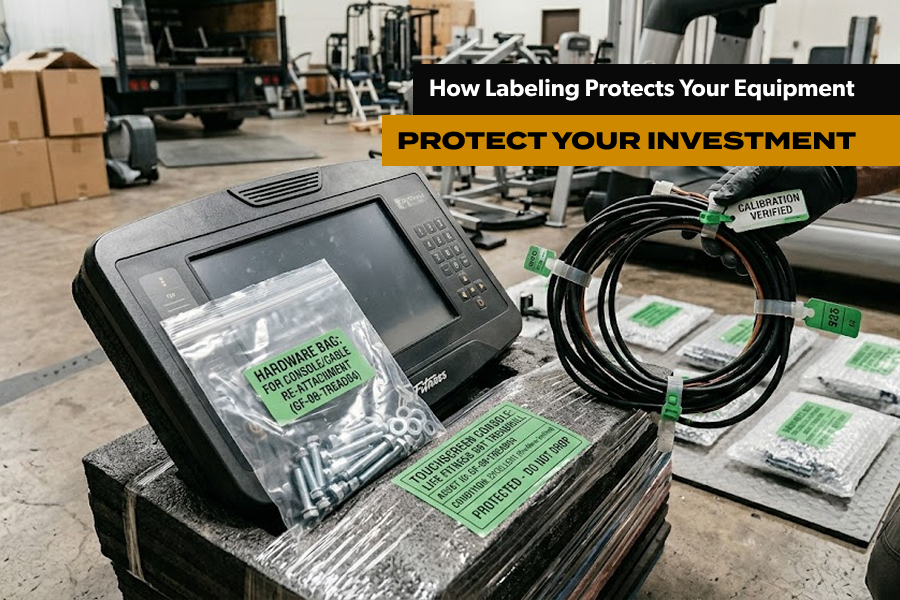
Good labeling isn't just about organization — it's also about protecting your investment.
When you're moving gym equipment, certain parts are particularly vulnerable: touchscreen consoles, digital displays, connection ports, upholstery, and all the small hardware that holds everything together.
Here's what works:
- Bag all the hardware for each machine and label the bag
- Secure and tag all cables so you know where they reconnect
- Wrap consoles with labeled protective padding
- Document the pre-move condition of each piece
When you do this right, you cut down on post-move service calls and make recalibration way faster. It's especially important if you're planning to have us do a preventive maintenance inspection after everything's in place.
Why Documentation Matters for Insurance
Let's talk about something most people don't think about until it's too late: insurance coverage during a move.
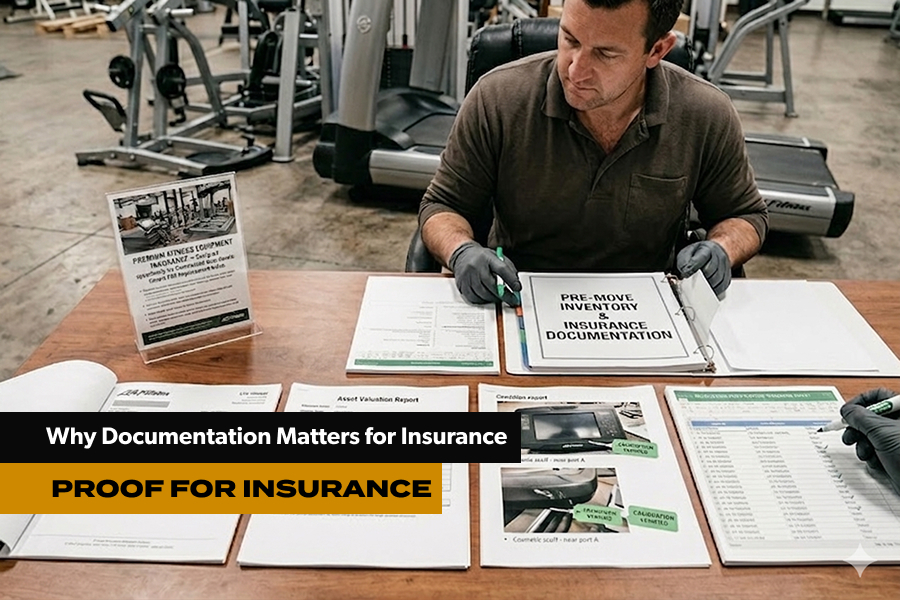
Even with experienced crews, equipment can get damaged in transit. A detailed inventory creates a clear record of what you owned, what condition it was in before the move, and what its value is.
That documentation includes:
- Proof of ownership
- Asset value
- Pre-existing wear or cosmetic damage
- Verification of what was actually relocated
If something does get damaged, having this information makes the claims process infinitely smoother. We also offer fitness equipment insurance that's designed specifically for commercial gym assets — not the generic moving coverage that might not cover the full replacement value of a high-end cardio unit.
How This Fits Into Your Bigger Move Plan
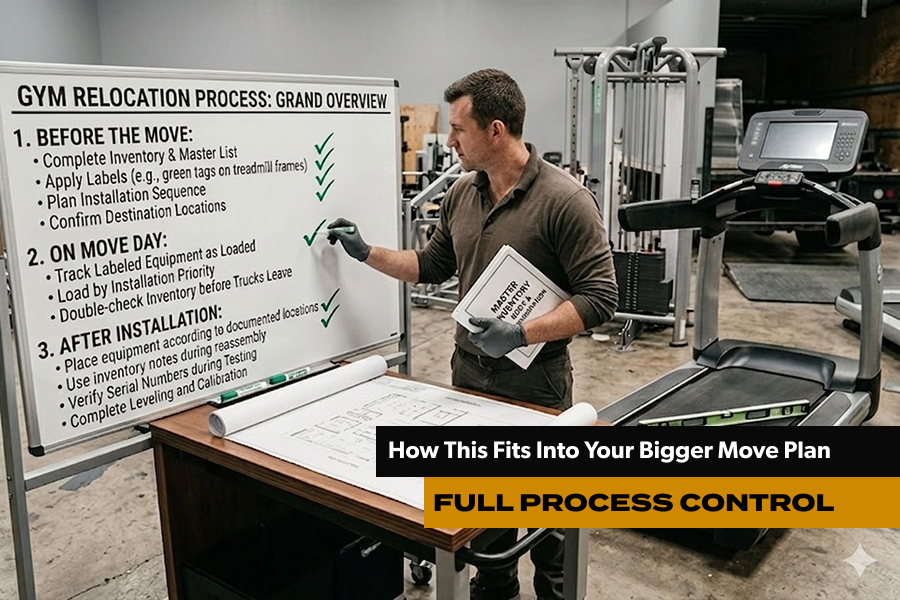
Labeling is just one piece of a successful gym relocation. Here's how it fits into the overall process:
Before the Move
- Complete your inventory
- Apply labels
- Plan the installation sequence
- Confirm where everything goes in the new space
On Move Day
- Track labeled equipment as it's loaded
- Load by installation priority
- Double-check the inventory before the trucks leave
After Installation
- Place equipment according to your documented locations
- Use your inventory notes during reassembly
- Verify serial numbers during testing
- Complete leveling and calibration
The gyms that plan this way avoid bottlenecks and get back to business faster. It's as straightforward as that.
Get the Full Inventory Labeling Kit
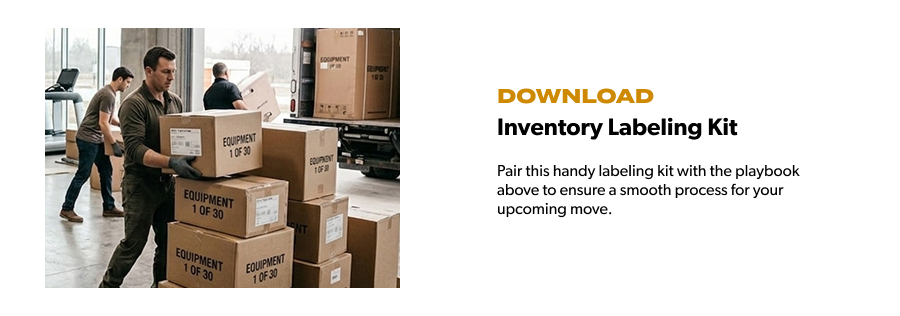
We've put together a kit that takes this beyond theory and gives you the actual tools to execute it.
The Inventory Labeling Kit builds on the equipment template in our Gym Relocation Playbook. If the Playbook tells you what's moving, the Labeling Kit shows you how to tag it, track it, and verify it on the floor before anything gets disassembled.
Inside you'll find:
- Printable label templates you can use right away
- Step-by-step tagging instructions
- Serial number verification standards
- How to bag and label hardware properly
- A pre-move verification checklist
Use the Playbook for the strategic overview. Use the Labeling Kit to make sure every piece of equipment is ready to move.
Want Help Planning Your Labeling Strategy?
If you're planning a gym move and want to make sure you're setting this up correctly, we can walk through it with you.
Schedule a virtual walkthrough with our team and we'll review your labeling approach, installation sequence, and reopening timeline. Getting this right early makes everything downstream easier.