





Gym Flooring Guide: Why Sound-Absorbing Flooring Matters
Posted by Ardent Fitness on May 28th 2026
Most people planning a home gym think about the visible parts first — the rack, the treadmill, the mirrors, the storage wall. Flooring usually comes later.
But once the workouts actually begin, the floor becomes one of the most important parts of the room, not just for protecting the surface underneath your equipment, but for controlling noise, reducing vibration, improving comfort, and helping the entire space feel more stable overall.
That matters in every type of home gym setup, whether it’s:
- a high-rise condo
- a townhome
- a basement gym
- a garage conversion
- or a dedicated room inside a detached home
Because without the right flooring system, even high-end equipment can end up feeling louder, harsher, and less stable than expected.
Why Sound Control Matters in a Home Gym
When people think about gym noise, they usually picture dropped weights. In reality, the bigger issue is often repeated impact.
A treadmill creates constant vibration with every step. Rowers, HIIT workouts, and strength training all transfer force into the floor beneath them. That force moves through the structure of the room itself.
In condos and townhomes, it can travel into neighboring units. In detached homes, it often carries into nearby bedrooms, offices, or living spaces.
And sometimes the room itself starts to feel noisy and harsh even when the equipment isn’t especially loud. That’s where sound-absorbing flooring makes a difference.
Not All Gym Flooring Helps With Sound
A lot of home gyms start with thin foam tiles or basic rubber mats. They’re easy to install and work fine for light use, but many aren’t designed to absorb vibration or repeated impact.
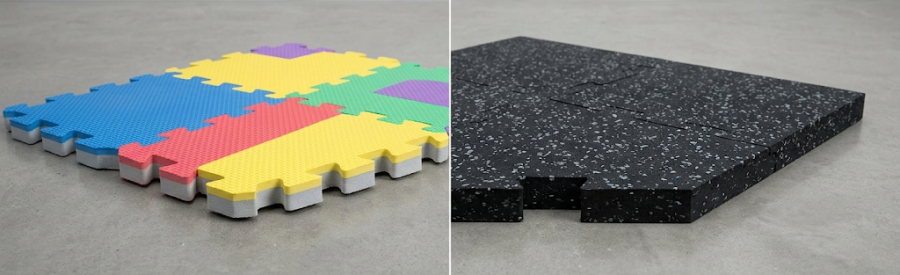
Over time, they can:
- compress unevenly
- separate at the seams
- shift under equipment
- provide very little sound control
- wear down faster in high-use areas
That’s usually when people realize gym flooring does much more than cover the floor.
What Sound-Absorbing Flooring Actually Does
Good gym flooring helps reduce the amount of force that transfers into the structure underneath the room. Instead of impact traveling directly through the floor, some of that energy gets absorbed and dispersed through layered materials. That can help:
- reduce vibration
- soften foot strike impact
- minimize rattling and shaking
- create a quieter workout environment
- improve comfort during training
It’s one of the reasons commercial fitness spaces rarely rely on a single thin rubber layer alone. The best-performing gym floors usually work as a system.
The Home Gym Flooring Guide: What Actually Matters
When choosing flooring for a home gym, there usually isn’t one “best” material for every setup. The right solution depends on how the room will be used. A few of the biggest factors to think through include:
-
The Type of Training
Different workouts create different flooring demands.
- Cardio spaces usually benefit from more shock absorption and vibration control because of repetitive foot strike impact.
- Strength training areas often need denser surfaces that can handle repeated load and dropped weights.
- Multi-use home gyms typically work best with layered systems that balance durability, acoustics, and comfort together.
-
The Subfloor Underneath the Gym
The structure underneath your flooring changes how the entire room performs.
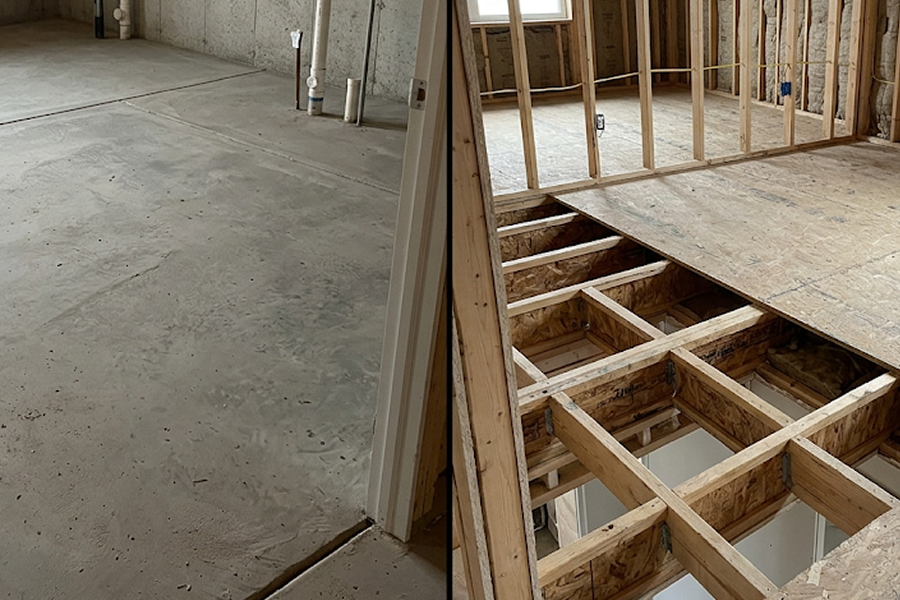
Concrete subfloors — common in basements and many high-rise buildings — tend to feel harder underfoot and transfer less movement through the structure. In those spaces, homeowners often prioritize comfort, joint support, and force reduction.
Wood-frame construction behaves differently. Upper-floor bedrooms, spare rooms, and bonus spaces tend to flex more under repeated impact, which can increase vibration and sound transfer throughout the home.
A few general guidelines:
- Concrete subfloors: usually benefit from flooring systems that add more shock absorption and training comfort.
- Wood-frame subfloors: often need additional underlayment and vibration control to help reduce movement and noise transfer.
- Upper-floor gyms: typically perform better with layered flooring systems instead of a single rubber surface alone.
This is where performance flooring systems become especially useful. Some solutions, including Ecore flooring systems, are designed to combine surface durability with acoustic and force-reduction layers underneath — helping the room feel quieter, more stable, and more comfortable during training.
A layered flooring system can combine a durable training surface with acoustic underlayment to help reduce vibration and impact transfer. -
Underlayment
One of the most overlooked parts of gym flooring is what sits underneath it. Underlayment acts as the buffer between the workout surface and the subfloor below. Without it, impact transfers more directly into the structure of the room. This becomes especially important in spaces with:
- treadmills
- rowers
- free weights
- HIIT workouts
- Olympic lifting
- upper-floor installations
In many home gyms, the underlayment contributes just as much to sound control as the surface flooring itself.
-
Equipment Placement
A treadmill pushed against a shared wall may create more noticeable vibration than the same machine positioned elsewhere in the room. A few small adjustments can help reduce noise transfer:
- keep cardio equipment away from shared walls when possible
- avoid placing treadmills directly above bedrooms
- leave slight clearance between equipment and walls
- use isolation pads beneath high-impact machines
- reinforce heavier-use zones with additional underlayment
Sometimes the issue isn’t the equipment itself, but how the room was planned around it.
-
Floating Platforms
Floating platforms aren’t only for serious lifters anymore. Many home gym owners use them to help reduce vibration and create a more stable training surface.
The concept is simple: the platform creates separation between the workout surface and the structural floor underneath it. That added layer helps absorb force before it transfers downward.
These setups are increasingly common in:
- garage gyms
- apartment gyms
- upper-floor fitness rooms
- functional training spaces
- strength-focused home gyms
Even smaller platform builds can noticeably improve how a room feels during workouts.
Choosing the Right Flooring System
The best flooring setup usually comes down to a combination of:
- the type of training
- the amount of impact
- the subfloor construction
- whether the space is shared with neighboring units
- and how often the room will be used
That’s why many homeowners and fitness designers look for flooring systems specifically engineered for performance and sound control.
Ecore is one example. Their fitness flooring systems are designed around force reduction, acoustics, ergonomics, and durability — all factors that become increasingly important in residential gym spaces.
The goal isn’t simply adding thicker rubber, but creating a flooring system that helps the room perform better overall.
The Flooring Is Part of the Experience
Home gym owners usually notice bad flooring only after the room is fully set up. The treadmill feels louder than expected. The floor vibrates during workouts. The room feels harsher on the joints. Equipment shifts slightly during use.
Good gym flooring solves problems before they become distractions. And the best home gyms don’t just look good on day one; they still feel good to train in years later.