





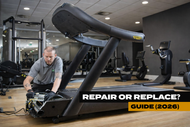
Gym Equipment Preventative Maintenance: Repair vs. Replace Guide (2026)
Posted by Ardent Fitness on May 20th 2026
If you manage a gym — or you’ve invested in a serious home gym setup — you’ve likely asked yourself:
- Should I repair this treadmill, or is it time to replace it?
- How long should commercial gym equipment actually last?
- How often should fitness equipment be serviced?
- Are we spending too much on reactive repairs?
These are practical questions. And the answer usually comes down to one thing: how well the equipment has been maintained over time.
Preventative maintenance doesn’t eliminate wear. It gives you visibility into it, and that makes repair-versus-replace decisions far more straightforward.
What Is Preventative Maintenance for Gym Equipment?
Preventative maintenance is scheduled service performed at consistent intervals to inspect, adjust, clean, lubricate, and test equipment. The idea is simple: evaluate wear before it becomes worse.
Over time, routine service builds a record of how each machine is performing. That record becomes useful when you’re deciding whether a repair makes sense or whether you’re putting money into something that’s nearing the end of its lifecycle. It’s less about the individual visit and more about the pattern you’re tracking.
What Does a Gym Equipment Preventative Maintenance Program Include?
A common question from gym owners and managers is what actually happens during a preventative maintenance visit.
While details vary by equipment type, a thorough inspection typically includes:
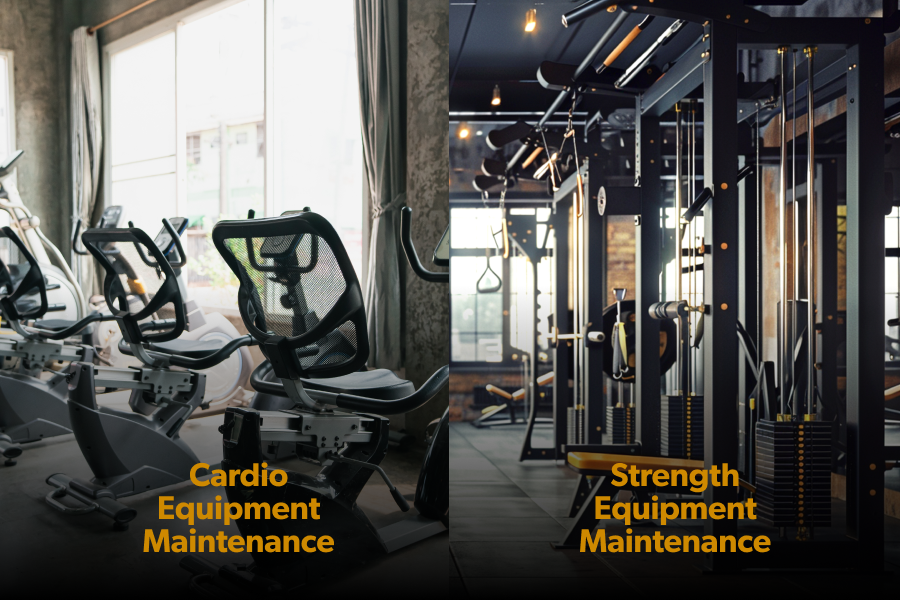
Cardio Equipment Maintenance (Treadmills, Bikes, Ellipticals, Rowers)
- Operational testing under load
- Belt and deck inspection (treadmills)
- Drive system evaluation
- Motor compartment cleaning
- Belt alignment and tension adjustments
- Lubrication of moving components
- Console and display checks
- Bolt and frame inspection
Strength Equipment Maintenance
- Cable and pulley inspection
- Chain lubrication
- Seat, roller, and guide rod alignment checks
- Attachment and handle inspection
- Structural integrity assessment
Our preventative maintenance plans follow this structured approach, with service intervals designed around usage and machine type rather than a one-size-fits-all schedule.
Nothing flashy — just a thorough, consistent evaluation that works best for every client.
How Often Should Commercial Gym Equipment Be Serviced?
It comes down to how hard the equipment is working. Start by looking at usage hours and past repair history. Those two factors usually point to the right cadence.
In a busy commercial facility, machines are under daily load and should be inspected several times a year. High usage hours (typically 40+ hours per week) mean more wear and tear, suggesting a shorter maintenance cadence (e.g., monthly). Frequent past repairs, even with average usage, indicate a recurring issue or a machine nearing the end of its lifespan, also pointing toward a shorter, more proactive maintenance schedule. Industry standard for general fitness equipment maintenance is typically every 1-3 months.
In a home gym, once a year is usually appropriate. Even with moderate use, dust, humidity, and periods of inactivity can affect belts, electronics, and moving parts. Low usage (typically <10 hours per week) and a clean repair history allow for a longer, less frequent maintenance cadence (e.g., quarterly or bi-annually). Usage patterns tell you more than the calendar does.
Repair vs. Replace Gym Equipment: How to Make the Call
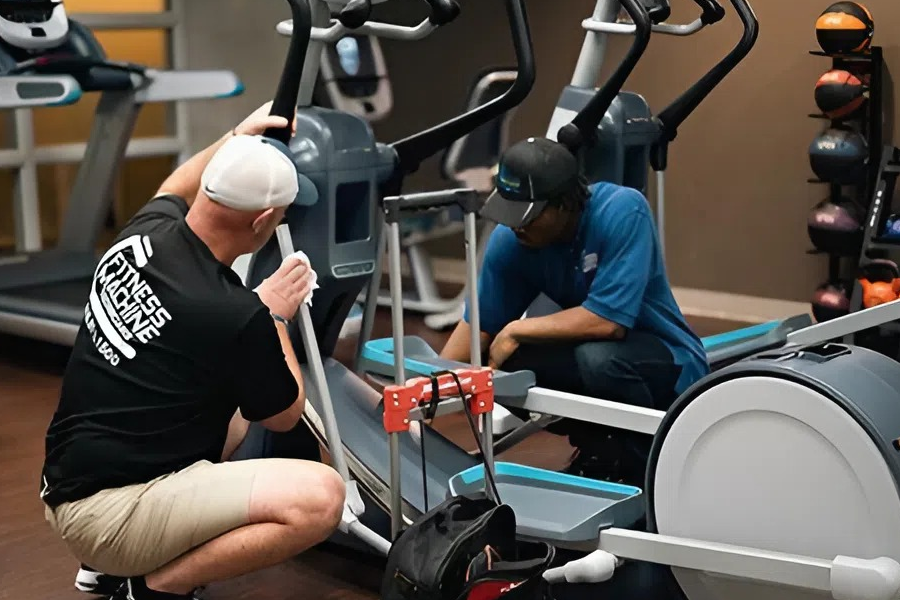
This is where maintenance history matters most. When deciding whether to repair or replace a piece of gym equipment, the documented maintenance history provides crucial data points. It helps you assess the equipment's reliability by revealing the frequency and nature of past breakdowns. A history showing frequent, recurring, or increasingly expensive repairs often signals that the unit is nearing the end of its useful life and that replacement is the more cost-effective long-term solution. On the other hand, a good history with minimal issues suggests a repair might be a wise investment.
When Repair Makes Sense
Repair is often reasonable when:
- The frame and structure remain solid
- The equipment is within its expected lifespan
- Parts are readily available
- Repair costs are well below replacement cost
- Service history shows consistent upkeep
Replacing a treadmill belt and deck, servicing a drive motor, or installing new cables on strength equipment can extend usable life significantly when the base unit is sound.
When machines are maintained regularly, repairs tend to be planned rather than urgent.
When Replacement Is the Smarter Long-Term Decision
There’s a point where continued repair becomes less practical. Replacement may be appropriate when:
- Service frequency increases year over year
- Major components begin failing sequentially
- Parts are discontinued
- Downtime starts affecting member experience
- Technology no longer aligns with facility standards
In commercial environments, recurring downtime impacts perception and retention. A local gym with a consistently out-of-order treadmill may lose members who rely on that specific machine for their routine, or a hotel with a broken elliptical may receive negative reviews impacting future bookings.
In residential settings, unreliable equipment disrupts training consistency. For instance, a home user whose weight machine cable snaps repeatedly will miss workouts, stalling progress and potentially leading to abandonment of the fitness goal altogether.
A clear service record makes these trends easier to recognize.
How Preventative Maintenance Reduces Downtime
Most major failures start as minor wear.
Loose belts. Dry bearings. Slight misalignment. Cable tension changes.
Routine preventative maintenance addresses those issues before they escalate. That reduces emergency service calls and keeps equipment available.
For commercial operators, that stability supports member satisfaction. For home gym owners, it keeps routines intact. For commercial operators, that stability supports member satisfaction and retention. For home gym owners, it keeps routines intact and equipment safe to use.

Fitness Equipment Lifecycle Planning in 2026
In 2026, gym operators are thinking more about asset lifecycle management.
Questions we hear often include:
- What is the average lifespan of commercial treadmills?
- How do I forecast equipment replacement cycles?
- How do I reduce long-term maintenance costs?
- When should cardio equipment be replaced?
In equipment maintenance, usage data, wear patterns, and service history are the critical documentation components gathered through preventative maintenance, providing the objective evidence necessary to make informed "repair vs. replace" decisions by combining metrics on operation load, physical degradation, and chronological repair/cost records to establish observed condition trends.
Without it, repair-versus-replace decisions rely on assumptions. With it, they rely on observed condition trends.